


Star Girl:Cosmic Conversations
4.61.60K Reviews
App Specs
- Version
- 2.2.6
- Updated On
- License
- Free
- Downloads
- 1,000,000+
- Developer
- Akeynan Apps
- Categories
- Entertainment
- Platform
- Android
Screenshots
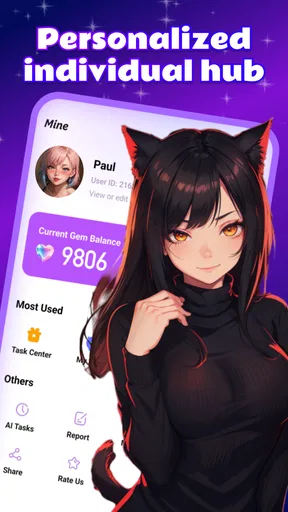
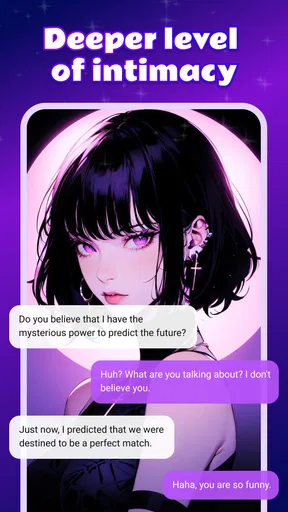
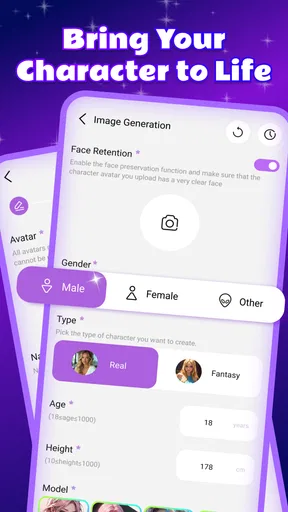
 Analysis by AppCompare
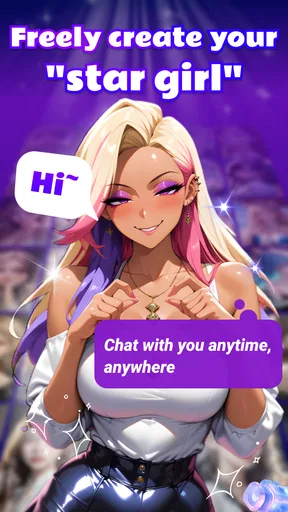
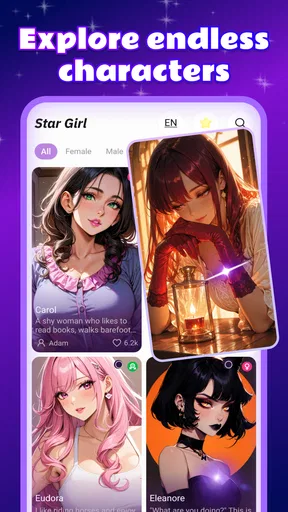
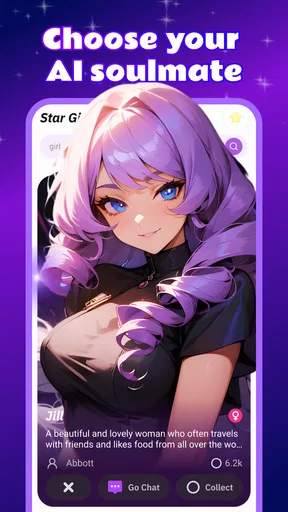
Star Girl:Cosmic Conversations is an entertainment app built around AI role-playing, character interaction, and collectible card unlocking. After spending time with it, I found its main appeal easy to understand: it turns a chat session into a small piece of interactive fiction, while the cards give the experience a sense of progress beyond simply sending messages. My overall view is positive, but with an important qualification. This is best approached as a playful companion and improvisational story tool, not as a replacement for a full video game, a serious relationship, or a carefully authored novel.
The app comes from Akeynan Apps and is free to install, which makes it simple to try without committing money at the beginning. It is listed for mature audiences aged 17 and over, so I would not treat it as a general family entertainment app. Its large audience, with more than a million installs and an average rating of 4.6 from roughly twenty-three thousand ratings, suggests that the basic idea has found a receptive audience. Those figures do not remove the need for personal judgment, though: AI conversations can feel very different from one user to another, especially when expectations about consistency and story quality are high.
How the conversation-and-card idea works in practice
The central experience combines two activities that are usually separated. In one direction, you chat with an AI character and guide the tone through your own replies. In the other, you unlock cards that add a collectible layer to the entertainment. That combination matters because a pure chatbot can become repetitive once the novelty of asking questions fades, while a card collection without meaningful interaction can feel like a checklist. Here, the conversation gives the cards context, and the cards give the conversation a reason to continue.
I found the role-playing angle more enjoyable when I treated each exchange as a scene rather than a normal conversation. Instead of asking only factual questions, I used replies that established mood, intention, or conflict. A short answer such as “I do not trust the signal, but I will follow it” gives the AI more material to build on than a vague request for something interesting. This is one of the most useful ways to approach the app: write as though you are co-authoring a lightweight science-fiction episode, not testing a search engine.
The space setting also helps the app establish a recognizable identity. Cosmic themes naturally support mystery, discovery, danger, and dramatic reveals, so even a brief exchange can feel more imaginative than an ordinary assistant chat. I would not expect the same level of continuity as a scripted adventure with a fixed plot, but the open-ended format lets me change direction quickly. If I want a tense exchange, a humorous detour, or a more reflective scene, my own wording has a noticeable effect on the experience.
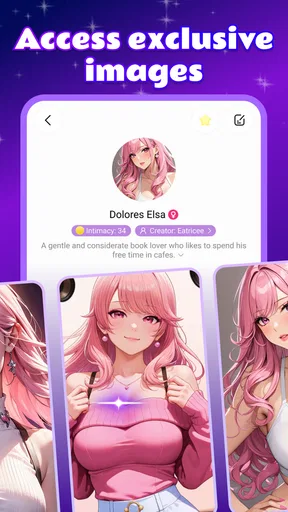
The card system is most appealing to users who enjoy collecting small rewards and watching an experience develop over time. It adds a reason to return when I am not in the mood for a long conversation. I can think of the cards as souvenirs from the app’s fictional world, although their value depends heavily on how much I personally enjoy collecting. Someone who sees every collectible as clutter may find this layer less motivating than someone who likes unlocking and organizing digital items.
Why the format feels different from ordinary entertainment apps
Most entertainment apps ask me to consume something prepared in advance: I watch a show, read a story, or play through a designed level. Star Girl:Cosmic Conversations gives me more responsibility for the content. The result is less predictable, but also less polished from moment to moment. A strong prompt can produce a memorable exchange, while a lazy prompt can lead to a flat one. That variability is not a flaw by itself; it is the trade-off that makes conversational role-playing possible.
Worth Reading Before You Choose

EA SPORTS FC Mobile 26 Is a Bigger Football Game, but It Takes Time

Flipboard Shows What News Apps Must Do Beyond the Feed

Switching to Android Auto Means Rethinking Your Driving Routine

Google Calendar Makes a Crowded Week Easier to Manage

Ludo King Makes the Most of the Minutes Between Plans

Baby Panda World Brings Quick Play to Modern Phones, but Its Game Library Feels Busy
Compared with a standard AI chatbot, this app has a clearer entertainment purpose. The character-focused setting and card unlocking give me a reason to stay inside the fictional frame instead of switching between unrelated questions. Compared with a conventional mobile game, however, it offers less of the structured challenge I would expect from levels, puzzles, or competitive play. If I want a defined campaign with reliable rules and a planned ending, a traditional narrative game is likely to suit me better.
It also differs from a streaming service in a practical way. Streaming gives me consistent production quality and a story that does not depend on my phrasing, while this app gives me participation. I cannot simply sit back and expect a complete episode every time; I need to contribute. That makes it a better choice for short creative breaks than for passive viewing, especially when I want to influence the direction of the entertainment rather than merely receive it.
Small habits that make the experience more rewarding
My first useful adjustment was to give the conversation a clear premise before trying to make it dramatic. I might decide that I am negotiating with a suspicious traveler, investigating a strange transmission, or trying to repair trust after a bad decision. Keeping one simple objective in mind prevents the chat from drifting into disconnected lines. It also makes the card-unlocking side feel more meaningful because I am returning to a recognizable fictional situation rather than starting from nothing each time.
A second habit is to vary the length of my replies. Very short messages are useful for quick turns and surprises, but they leave less room for the AI to understand motivation. Longer messages can establish atmosphere, yet they may also over-direct the scene. I get better results by alternating between a concise action and a sentence explaining why the character takes it. This creates a rhythm that feels closer to role-playing than to an interview.
I also recommend treating unexpected responses as invitations to redirect, not as instructions that must be accepted. AI role-playing can occasionally move in a strange direction or misunderstand the emotional point of a scene. When that happens, I state the correction plainly and continue with the intended premise. This is more effective than arguing about the mistake for several turns. The app is at its best when I collaborate with its improvisation while still keeping control of the kind of story I want.
The cards can be used as prompts for conversation rather than only as rewards. If I unlock something that suggests a new character, location, or mood, I can build the next exchange around that idea. This turns collection into a creative tool. It is a particularly good workflow for anyone who enjoys writing but does not always know how to begin: use the collectible element as a constraint, then see what kind of scene grows around it.
The weakness that matters most
The same openness that makes the app accessible can also make it feel inconsistent. A human author remembers the details of a plot because those details were deliberately written into the story. An AI conversation may lose track of an earlier promise, soften a conflict too quickly, or respond in a way that does not match the mood I established. I consider this the app’s most meaningful limitation because it affects immersion directly. The more seriously I treat the story, the more noticeable those breaks become.
There is also a difference between conversational novelty and lasting depth. The first sessions can be absorbing because every response feels like a possibility. Over time, I need to bring my own ideas to keep the experience fresh. Users who expect the app to supply an endlessly developing narrative without much input may become disappointed. In my view, it works better as a creative partner than as an automated storyteller that does all the work.
The free entry point is helpful, but the presence of in-app purchases means I would pay attention to my spending if I became invested in the card-collecting side. Individual purchases range from $3.49 to $104.99, so the difference between casually trying the app and spending heavily is substantial. I would begin with the free experience, decide whether the conversations genuinely hold my attention, and only then consider whether additional purchases fit my budget. The collectible structure can make optional spending feel tempting, particularly for users who dislike leaving a collection incomplete.
Another point worth considering is the mature age classification. That rating should shape how I think about the app’s audience and where I use it. I would not hand it to a child simply because the interface resembles a lighthearted chat experience. Adults who are comfortable with fictional role-playing are the natural audience, while parents looking for safe entertainment for younger users should choose something specifically designed for that age group.
Who will get the most from it
I would recommend this app to people who enjoy science-fiction atmosphere, character-driven improvisation, and collectible progression. It is especially suitable for someone who wants a five-minute creative distraction during a commute, a lunch break, or a quiet evening. For example, after work I might open it with one small goal—convince a fictional character to reveal a secret—play through a few exchanges, and stop once the scene reaches a satisfying turn. That is a realistic use case because it does not demand a long uninterrupted session or a commitment to a complex campaign.
It can also help writers and role-playing fans loosen up. I would not use it as a substitute for editing or research, but it can generate situations, character reactions, and twists that I can later reshape in my own work. The important distinction is that the app supplies sparks, not finished material. Its best creative value comes from selecting the interesting parts and improving them rather than accepting every response exactly as written.
People who prefer passive entertainment, strict rules, or guaranteed narrative continuity should probably skip it. A television episode will provide more dependable pacing. A conventional adventure game will offer clearer objectives and systems. A dedicated social platform may be better for genuine human conversation. This app occupies a narrower middle ground: it is interactive enough to feel personal, but artificial and flexible enough that I must accept occasional odd turns.
I would also be cautious about recommending it to anyone who tends to confuse simulated companionship with a real relationship. The conversational format can feel engaging, but it remains entertainment. Keeping that boundary clear makes the experience healthier and more enjoyable. I use it for imagination, mood, and playful interaction, not for emotional decisions that require a trusted person or professional support.
Practical expectations before installing
The app is available as a free entertainment download, and it supports devices running Android 7.0 or later. The current version is 2.2.6, so users with older phones should check compatibility before getting attached to the idea. I would also make room for experimentation rather than judging it from one rushed exchange. The quality of a role-playing chat depends partly on the premise, tone, and amount of direction I provide.
When deciding whether to spend money, I would ask myself a simple question: am I enjoying the conversations, or am I only chasing the next card? If the answer is the latter, I would pause. The card mechanic is a useful supplement, but it should not be the only reason to continue. The app has more to offer when the collection supports an imaginative conversation instead of replacing one.
Privacy and personal boundaries deserve ordinary caution with any conversational entertainment app. I would avoid entering private information, sensitive personal history, or details that I would not want included in an online service. That is not a criticism unique to this title; it is simply a sensible habit when interacting with AI. Staying within fictional scenarios also helps preserve the playful tone and keeps the experience focused on what it does well.
Akeynan Apps has positioned this release as an entertainment experience rather than a productivity tool, and that distinction matches my use of it. I would not open it expecting accurate recommendations, professional guidance, or a dependable factual assistant. I open it when I want to improvise a scene, explore a character’s reaction, or enjoy the satisfaction of unlocking something connected to the fictional setting.
My verdict after using it
Star Girl:Cosmic Conversations succeeds because it gives AI chat a specific dramatic frame and adds a collectible reason to return. Its strongest quality is not technical complexity; it is the way the conversation and card elements encourage me to participate. When I supply a clear premise and accept a little unpredictability, the app can produce entertaining, personal-feeling moments that ordinary streaming or static story apps cannot offer.
Its limitations are just as clear. The story can lose continuity, the quality of a scene depends on my input, and the purchase range deserves careful attention. The mature rating also means it should be treated as adult entertainment, not a casual app for every member of the household. Those are meaningful trade-offs, but they do not cancel out the core appeal.
My recommendation is specific: try it if you enjoy conversational role-playing and want a light science-fiction activity that can fit into short breaks. Start free, use the cards as creative prompts, and judge the experience by the quality of the interaction rather than by the size of the collection. If you need a fully authored story, human conversation, or a game with firm rules, choose another category instead. For the right user, though, this is a playful AI companion for making your own small cosmic scenes, and that focused purpose is what makes it worth a look.
Pros
- Charming space-themed visuals with colorful character designs.
- Conversation choices make interactions feel more personal and engaging.
- Lighthearted gameplay suited to short
- casual sessions.
- Easy-to-learn controls make it accessible for younger players.
- Collectible elements add motivation to keep exploring the game.
Cons
- Some dialogue options may feel repetitive after extended play.
- Progress can be slow without spending extra time in the app.
- The target audience may find the story too simple.
- Requires an internet connection for some features or content.
- Limited depth may reduce its appeal for experienced adventure players.
FAQs for Star Girl:Cosmic Conversations
What is Star Girl: Cosmic Conversations?
Star Girl: Cosmic Conversations is an interactive mobile experience centered on conversations with a star-themed virtual character. The app is designed for users who enjoy casual chat, personality-driven interactions, and an imaginative cosmic setting. Before downloading, remember that the quality and variety of replies may depend on the app’s available conversation system, supported language, and whether an internet connection is required for certain features.
How does the conversation system work in Star Girl: Cosmic Conversations?
After opening the app, users can interact with the Star Girl by selecting or entering messages and following the available conversation prompts. The experience is intended to feel relaxed and personal rather than like a traditional game with complex controls. Some responses may be contextual, while others can feel repetitive. Your overall experience may vary depending on the topics supported and the app’s current content updates.
Is Star Girl: Cosmic Conversations suitable for children?
Parents should review the app’s age rating, privacy information, and conversation content before allowing children to use it. A virtual conversation app may include themes, wording, advertisements, or external links that are not appropriate for every age group. It is also important to check whether the app collects messages, usage information, or account details, and to use device-level parental controls when needed.
Does Star Girl: Cosmic Conversations require an internet connection or include purchases?
The app may require an internet connection to load conversations, process interactions, display advertisements, or access updated content. Availability of offline features can vary by version and device. Users should also check the store listing for optional in-app purchases, subscriptions, or rewarded advertisements before downloading. If the app offers premium conversation options or additional content, review the payment details carefully.
What should I check before downloading Star Girl: Cosmic Conversations?
Before installing Star Girl: Cosmic Conversations, check that your Android or iOS device meets the listed requirements and has enough free storage. Review the latest store description, permissions, privacy policy, age rating, and recent user feedback because these details can change with updates. Also confirm whether the app is officially published, whether it contains advertising, and whether its features are available in your country or language.


